


The math you do in your head before a decision: required equity, outs, fold rate and so on.
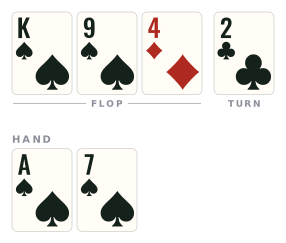
There are three basics: the equity you need to call (required equity), the cards that complete your hand (outs) and their chance, and how often the opponent must fold for a bluff to work (fold rate). You answer in your head from memorized numbers. Example. Facing a bet of 5 into a pot of 10, you call 5 into a total of 20, so the required equity is 25%. A flush draw with hand A♠ 7♠, flop K♠ 9♠ 4♦, turn 2♣ (9 outs) completes on the river about 18% of the time (9 × 2), so calling pays only with money you can win after it hits (implied odds).